Merriment is the ultimate reality wherein the absolute of the universe is identical with just being, the true individual self. The universe is the source of all reality, the source of all conscious thought, and the source of all perfection-bliss. It is the ultimate, the complete, the destination of spiritual pursuit. Therefore, Merriment is spiritual contentment, uninhabited happiness, the joy of purity, the realisation of the true being, knowledge, to be able to live in the present happiness. Joy can be expressed with music, dance, song, it is a type of worship, where you are able to experience happiness at this moment and the love felt by joining in the unity, it is the Self which is becoming one with the universe, a spiritual happiness, called Sat-cit-ananda, which consist of three words; sat - being present, pleasure, beautiful, honest cit, cintana - pure thought, spirit, soul, thinking, and ananda - joy, delight, happiness, thing wished for, awakened, pure happiness. It is happiness born from the seclusion of sense pleasures (anger, lust, greed, etc.) and the elimination of the hindrances of impurities. It is also the happiness of concentration, the union with the creator within you.
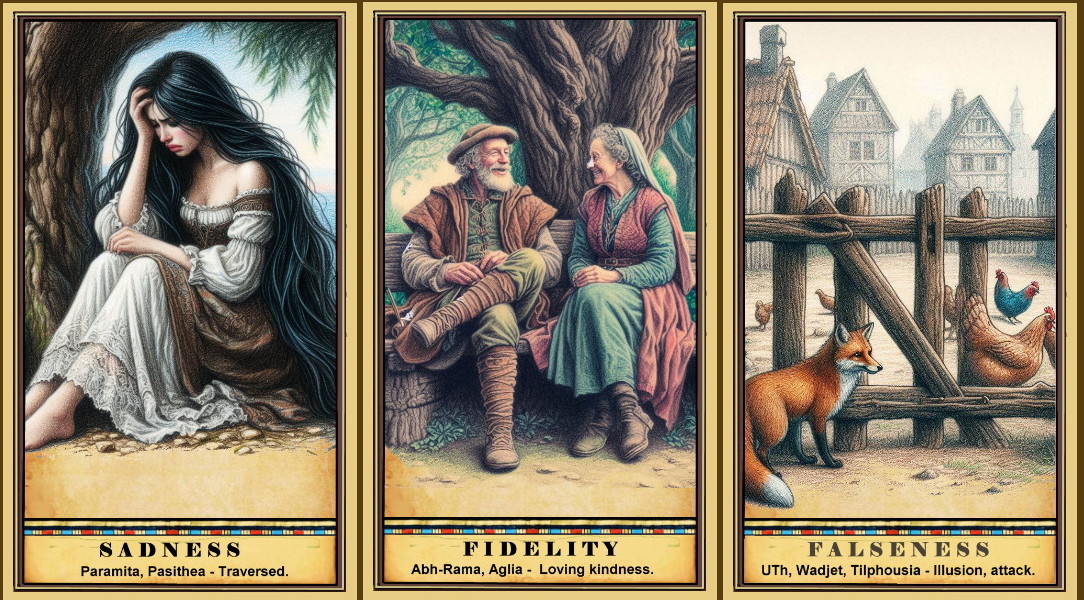
The Sadness card advises caution against becoming consumed by one's grief. It serves as a reminder that while sorrow is an inevitable part of life, it should not overshadow the potential for future joy and fulfilment. The card encourages seeking support from friends, family, or counsellors and finding healthy outlets for grief. In summary, the Sadness card is a complex symbol that encompasses the multifaceted nature of human emotion. Its appearance in a tarot spread is an invitation to confront sorrow head-on, to heal, and ultimately to grow from the experience.
With Sadness, you learn the meaning of Loyalty.
Loyalty, a virtue interwoven with trust, unconditional love, and the essence of friendship, manifests in various forms. It's seen in the steadfast support between lifelong friends, the unwavering faithfulness of a devoted partner, and the reliable allegiance of a trusted colleague. It teaches us about loving kindness through acts of generosity and compassion, about obligation through our commitments to others, about assistance through our actions to help those in need, and about devotion through our enduring dedication to causes close to our hearts. Loyalty vibrates with our energies, echoing our thoughts and feelings in consistent harmony.
Why Loyalty followed by Falseness?
Sadness is teaching loyalty, trust, unconditional love, and friendship, in other words, you arrive at TRUST. With trust, you can become vulnerable to Falseness, who might appear as a loyal friend, yet their only aim is to take from you what you have. the concept of 'falseness' signifies deception, betrayal, or illusion. For instance, Falseness often represents deceit or a need to act strategically. Many depictions show a figure sneaking away from others, which can imply a secretive or dishonest approach. Understanding the 'falseness' in tarot requires a deep dive into symbolism and context. It's a card played by the deceiver, offering you a mirage of reality crafted by falsehoods. This card of Falseness is depicted vividly through one of the three Furies, ancient symbols of retribution that stand as the pillars of sorrow. The three Furies, as they are known, embody ignorance, attachment, and aversion, the embodiment of the Lord, Narcissus. These formidable forces weave into the fabric of human suffering, each one a thread in the tapestry of pain. Ignorance blinds us from the truth, leading us astray with its siren song. It can appear as propaganda, meant to deceive, breaking up the family unit and with that, the collapse of society, and Death.
Thus, these cards are warnings that trusting too much can lead to your downfall. Instead, you should walk with caution, but without fear. Fidelity should be your ally, not a faithful trust...
It serves as a reminder to seek the true nature of things beyond their superficial appearances and to pursue wisdom that dispels ignorance. By understanding the meaning behind the 'falseness', you can begin to unravel the layers of illusion that bind them, leading toward liberation. Examples in Buddhist teachings, such as the parable of the poisoned arrow and the allegory of the cave, further illustrate how delusions can trap us in torment.


